Oct 13, 2025
Ensuring Accuracy with Calibration Services for Diagnostic Equipment
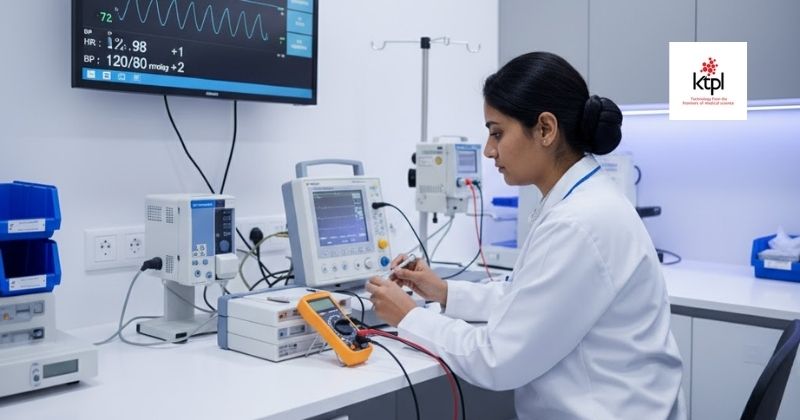
Modern healthcare is based on correct diagnostics. Since laboratory analyzers and imaging systems all rely on the accuracy of the equipment's operation. Calibration services for diagnostic equipment are crucial in ensuring accuracy.
Any slight variation in a diagnostic tool can result in a wrong diagnosis, misdiagnosis, and treatment. That measure of error can be costly in healthcare. Frequent calibration is important to ensure that diagnostic equipment is still functioning to the national and international standards that can be used to make better clinical decisions and ensure patient safety.
Knowing the Calibration Services for Diagnostic Equipment
Calibration refers to the procedure of relating the performance of a device to some known standard and attuning it so as to reduce the error of measurement. In diagnosis, the calibration includes:
- Checking the Accuracy of the Devices: Checking the accuracy of the equipment with certified reference tools.
- Identification of Deviations: The identification of a discrepancy between actual readings as compared to expected standard values.
- Adjusting Instruments: Adjusting the instruments to ensure they are within acceptable tolerance levels.
- Check: Assuring that the modified device is up to the acceptable working standards.
This is done to a broad variety of medical equipment and includes:
- Hematology and clinical chemistry analyzers.
- X-ray, CT, MRI, and ultrasound equipment
- Imaging devices (X-ray, CT, MRI, ultrasound)
- Patient monitors and ventilators.
- ECG/EEG machines
- Laboratory apparatus and centrifuges.
The importance of Calibration in Diagnostics
Calibration provides the reliability of data. When diagnostic instruments are no longer calibrated, a number of problems may arise:
- False laboratory findings may cause the wrong interpretation of cases.
- Equipment that has erroneous calibration can produce unclear or misleading images.
- Improper patient monitoring devices may overlook important physiological alterations.
- Mistakes in blood tests may have an impact on the dosage and mode of treatment.
Calibration that is regularly taken reduces such risks by:
assurance of instruments to give repeatable and traceable results.
- Meeting the requirements of NABH, NABL, and OEM
- Conforming to NABH, NABL, and OEM specifications
- Lessening the downtime due to unforeseen failure.
- Helping to identify faults earlier, before they can impact clinical processes.
This does not only secure patients but also assists hospitals and laboratories to keep trust, accreditation, and operating efficiency.
The use of a regularized calibration timetable has a number of long-term benefits:
- Improved Diagnostic Accuracy: Calibrated instruments are reliable and give the same results.
- Regulatory Compliance: Within NABL standards, NABH guidelines, and OEM performance standards
- Streamlined Equipment Operation: Wear and tear are identified at an early stage, which increases the lives of the devices.
- Cost Savings: Stops high-cost emergency repairs and unnecessarily required replacements.
- Enhanced Safety of Patients: Stremens health care facilities are less prone to mistakes in diagnosis and treatment.
- Smooth Audits: Streamlines the paperwork and compliance in the inspection and certification.
We do not only do regular calibration as a maintenance measure, but it is a strategic quality assurance measure that has direct consequences to patient outcomes and credibility in operations.
Covered Industries & Equipment
Diagnostic equipment calibration of equipment is needed in various healthcare settings:
- Hospitals: To include ventilators, patient monitors, infusion pumps and imaging systems.
- Laboratories: Diagnostic, analyzers, pipettes, centrifuges, incubators, testing instrument.
- Imaging Centers: X-ray, CT, MRI as well as ultrasound machines.
- Specialty Clinics: ECG, EEG, dialysis machines and portable diagnostic equipment.
Each type of equipment has its own standards and intervals of calibration. Engaging the service of a professional calibration provider is a guarantee that the appropriate amount of attention is paid to each device, depending on its purpose and frequency of use.
The Structured Calibration Process of KTPL
KTPL Medical adheres to the systematic, NABL-congruent process of providing calibration services for diagnostic equipment of reasonable accuracy and traceability:
1. Premier Equipment Inspection
- Graphical inspections of fractures or abnormalities.
- Checking of serial numbers and the history of devices.
2. Functional Testing
- Measurement of the accuracy of devices using traceable reference instruments.
- Determination of drift or nonconformance to standards.
3. Adjustment & Calibration
- Adjusting measurements to eliminate deviations.
- Fitting performance to NABL and OEM.
4. Validation & Documentation
- Redoing to check the accuracy.
- Producing elaborate calibration certification with records of traceability.
5. Maintenance Recommendations
- Providing recommendations on the operating patterns, preventive maintenance, and recalibration.
The process makes sure that all of the diagnostic appliances are brought back to the optimal functioning level, which facilitates clinical accuracy and operational stability.
Why Choose KTPL Medical
KTPL Medical is a reputable medical calibration provider to health institutions in India.
- Experienced Engineers: The team of KTPL consists of skilled certified professionals who have vast experience in the calibration of diagnostic equipment.
- Regulatory Alignment: The services are regulated according to the standards of NABL, NABH, and OEM, making the services completely compliant.
- GLOBAL Presence: Quick and consistent calibration services in several geographical areas.
- Multi-Equipment Capability: Lab analyzers to the state-of-the-art imaging equipment.
- Timely Service: Periodic calibration reduces disruption and downtime.
KTPL has integrated technical expertise, regulatory skills, and customer orientation in the Calibration services for diagnostic equipment remains in perfect condition.
Frequently Asked Questions
Q1. What is the frequency of calibration of diagnostic equipment?
Ans: The majority of devices are supposed to be calibrated every year, yet important or highly utilized devices can be checked quarterly or biannually.
Q2. Is there an issue of calibration influencing accreditation?
Ans: Yes. NABA and NABH accreditation require regular calibration. It guarantees that all testing equipment is of traceable standards.
Q3. What in case of a device failure to calibrate?
Ans: KTPL offers recommendations and reports in detail. Depending on the problem, modifications, repair, or replacement can be recommended.
Q4. Do you offer on-site calibration?
Ans: Yes. KTPL provides on-site calibration, which takes a short time, and laboratory-based calibration of sophisticated instruments.
Q5. Will certificates be given after calibration?
Ans: Yes. Each calibrated device is accompanied with a certificate and a report traceable by NABL and audit-ready.
Conclusion
Quality diagnostics is based on the quality and well-calibrated equipment. Defective tools may result in expensive mistakes, regulatory difficulties, and patient safety risks. Routine calibration of the diagnostic equipment assists healthcare organizations in ensuring that their clinical accuracy is preserved, standards are observed, and operational risks are minimized.
KTPL, which is a medical organization, offers organized and expert-based Calibration services for diagnostic equipment of hospitals, labs, and imaging centers. Through this kind of collaboration with KTPL, you will find that your diagnostic instruments will work optimally, on a day by day basis and on a patient by patient basis.
️Book your own KTPL Medical calibration service. Enhance diagnostic precision, adhere to compliance requirements, and develop patient confidence.
 +91-11-43523125
  mktg@ktplmedical.com