Apr 11, 2026
Rapid Tissue Processor: The Complete Guide to Faster & Efficient Histopathology Workflow
In the medical diagnostics field, where stakes are high, time is not merely a measure but a matter of life and death when it comes to patients. Histopathology has long been a marathon process, taking days to complete the process from biopsy to diagnosis. The advent of the rapid tissue processor has, however, changed this marathon into a sprint, whereby laboratories can now provide life-altering results in a fraction of the time.
With the growing volume of samples and greater need to have same-day diagnostics in hospitals and diagnostic centers, rapid tissue processing knowledge and optimization are no longer a luxury. This guide discusses the mechanism of these systems, the effects of these systems on the efficiency of the laboratory, and the critical importance of technical maintenance in achieving diagnostic precision.
What is a Rapid Tissue Processor?
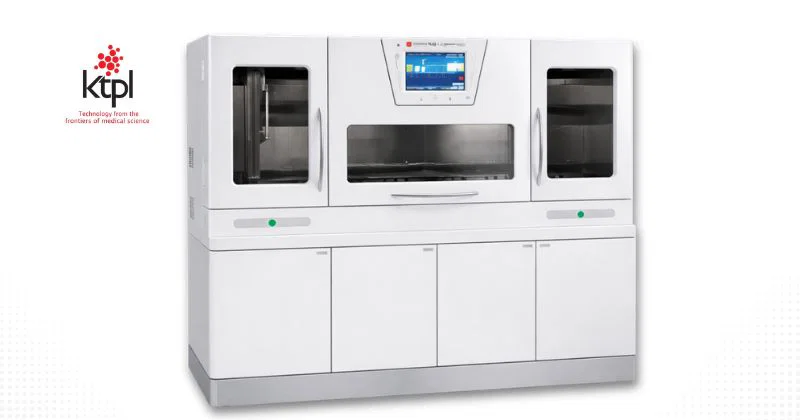
A rapid tissue processor is a new high-tech histopathology tool that is used to prepare tissue samples to be examined under a microscope, which has been automated and quickened by a rapid tissue processor. Traditionally, tissue processing, the process of dehydrating tissues and substituting the water with a substance (typically paraffin wax) that can be sliced into thin sections, is a time-consuming, overnight process.
To shorten these steps, rapid systems employ the use of recent technologies such as microwave-assisted methods, high-vacuum conditions, and special reagents that do not destroy the fragile cellular architecture.
Where are they used?
- Tertiary Care Hospitals: In which often surgical decisions are made based on rapid biopsy results.
- High-Volume Diagnostic Labs: To cope with huge daily throughput without backlogs.
- Research Centers: Where fast data turnaround speeds up clinical studies and trials.
How a Rapid Tissue Processor Works
The basic aim of any tissue processor is to process a raw biological sample and convert it into a stable, wax-impregnated block. Although the chemical steps are the same as those in the conventional processes, a fast tissue processor is used to maximize the physics of the action.
- Fixation: It is the biological time that is frozen. Fixation (typically with formalin) inhibits the decay and autolysis of tissues. In order to accelerate the fixatives' penetration into the tissue core, rapid processors frequently employ controlled heat.
-
Clearing: Alcohol and paraffin wax do not mix, so a cleansing agent (traditionally xylene) is employed. The high-speed processor makes sure that all the alcohol has been eliminated from the tissue, leaving it clear and permitting the infiltration of the wax.
The Secret Sauce: The combination of Vacuum, Agitation, and Temperature is what makes a processor rapid. With the three variables, the processor causes the reagents to be pushed into the tissue at a rate that is much higher than the reagents would be pushed by gravity and capillary action alone.
Benefits of Using a Rapid Tissue Processor
Introducing rapid processing technology has a ripple effect of advantages on the chain of healthcare:
1. Faster Turnaround Time (TAT)
This is the most noticeable advantage. A morning biopsy can be processed, embedded, sectioned, and stained in the afternoon. This waiting time decrease is priceless to a patient who is awaiting to receive the news whether a tumor is benign or malignant.
2. Improved Lab Efficiency
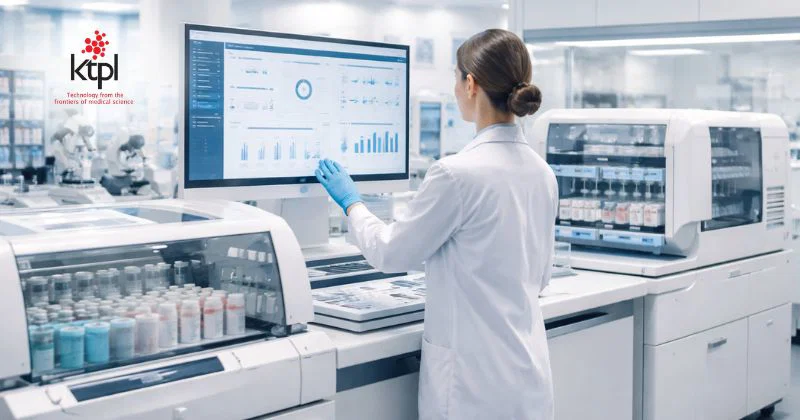
When all the overnight samples are ready simultaneously, conventional processors can cause a "logjam" in the morning. With fast processors, they can be used to stagger the workflow, keeping the embedding stations and microtomes busy all day.
3. Consistent Results
The possibility of human error is a major risk of manual or semi-automated processing. Quick processors incorporate approved pre-written protocols that guarantee that all the samples are treated with identical accuracy, no matter who the technician is working with on the shift.
4. Better Patient Outcomes
Time to Treatment is an important performance indicator in oncology. Quickened pathology reports imply that surgeons and oncologists have the chance to start treatment plans several days before using conventional methods.
Common Challenges in Rapid Tissue Processing
The technology is potent, but it is sensitive. Unless the "speed" is matched with the "precision," a number of problems can occur:
- Incomplete Processing: When the tissue is too thick to slice through to the center of the sample, then the center of the sample is left raw and cannot be sliced into thin sections.
- Overheating: The tissue may be overheated, causing it to be cooked, producing brittle samples and destroying cellular detail (morphology).
- Paraffin Contamination: Fast cycles are to be used with clean reagents. When the wax is contaminated with clearing agents, the blocks will be soft enough not to be sectioned.
Importance of Calibration & Maintenance
A fast tissue processing device is a complicated apparatus that includes warmers, vacuum cleaners, and sophisticated sensors. The speed of the machine can only be guaranteed by regular calibration and maintenance in order to avoid affecting the accuracy.
Why It Matters:
- Accuracy of temperature: A change in temperature by 2 degrees can destroy a sample batch. Calibration is to make sure that the sensors are reading the truth.
- Vacuum Integrity: Once the vacuum pump is not sealed, the high-speed section of the processing does not happen, resulting in incomplete dehydration.
- Compliance: The NABL and NABH regulatory bodies demand written evidence of equipment calibration in order to ensure that laboratories are accredited.
Key Maintenance Tasks:
- Checking Seals and Gaskets: To maintain a constant vacuum pressure.
- Cleaning Lines of Reagents: To avoid cross-contamination and blockages.
- Software Updates: To have the most recent safety measures and processing algorithms.
How Rapid Tissue Processors Improve Lab Workflow
The Overnight model of pathology is being phased out. Quick tissue processors enable labs to trend towards a lean process. Labs will not need to wait until a 12-hour cycle is complete, but can run smaller lots of samples every 2-3 hours.
This results in:
- Elimination of Morning Bottlenecks: Even distribution of workload throughout the day.
- Same-Day Reporting: Increasing the lab's value to the hospital and its patients.
- Lower Physical Footprint: Due to high throughput and fast processors, two or three traditional machines may sometimes be replaced by a single high-throughput and fast processor, which is a space-saving device.
How to Optimize Rapid Tissue Processing
In order to maximize your investment:
-
Tissue Thickness: Rapid cycles perform better when tissues are sliced to an equal thickness (typically 3-4mm).
-
Select High-Quality Reagents: Low-cost reagents may be subjected to the heat and vacuum of a high-speed processor, thus deteriorating.
-
Invest in an AMC: An Annual Maintenance Contract will provide a situation in which professional biomedical engineers will detect minor mechanical problems before they cause an overall system breakdown.
How KTPL Supports Rapid Tissue Processing Systems
At KTPL Medical, it is our business to make sure that your histopathology lab will never skip a beat. We offer full service on rapid tissue processing technology to maintain an effective and compliant workflow.
Our Special Services:
- NABL-Compliant Calibration: Accurate calibration of temperature and vacuum sensors.
- Preventive Maintenance and AMC: Preventive service in order to reduce downtime and prolong the life of equipment.
- Expert Equipment Supply: We offer hi-tech new and refurbished high-volume rapid tissue processors that meet the volume needs of your lab.
- Biomedical Support: Stand-by engineers will help fix the technical problems quickly so that your TAT is not affected.
Real Impact on Healthcare Delivery
When the lab is changed to rapid processing with professional maintenance, the results can be quantified:
- 30% Increase in Daily Throughput.
- Reduction in Re-processing Rates because of increased consistency.
- Higher Clinician Satisfaction due to improved turnaround time for diagnostics.
Conclusion
The modern histopathology lab is the Rapid Tissue Processor. It fills the gap between the high-volume requirements and the necessity to use precision in the surgery. The machine, however, is as good as the maintenance that it gets.
Through fast technology coupled with rigorous calibration and preventive maintenance, the labs will be able to make sure that they are not only moving faster, but also moving better, providing accurate, timely, and life-saving results to all their patients. Turnaround time and absolute diagnostic accuracy with KTPL Medical.
Contact KTPL Medical Today to have expert calibration, maintenance, and equipment solutions that are tailored to the modern laboratory.
FAQ
Q1. What time does a rapid tissue processor save over the traditional techniques?
Ans: A rapid tissue processing machine takes as little as 2-4 hours to complete the cycle, versus the 8-12 hours of the traditional processes. This enables diagnosis on the same day and much quicker decision-making regarding patients.
Q2. Is there any influence of speed on the quality of histopathology tissue samples?
Ans: Not with optimized protocols; fast processors have vacuum and temperature regulation to preserve cellular morphology. Properly calibrated systems will be used to make sure that the samples of the biopsy are completely penetrated and do not become brittle or inadequately processed.
Q3. What is the importance of an AMC when it comes to fast processors?
Ans: The heating modules and high-pressure vacuum in rapid processors are highly worn in the course of everyday use. An AMC guarantees preventive care, without the emergence of emergency breakdowns that can halt the entire diagnostic process.
Q4. What are the major steps that are processed by an automated rapid processor?
Ans: The system automates the key steps of fixation, dehydration, clearing, and paraffin infiltration. The machine is able to optimize these steps so that the tissue is ready to be embedded and sectioned in record time.
Q5. What is the overall effect of rapid processing on the workflow of the hospital?
Ans: It can remove the overnight bottleneck and enable an uninterrupted, lean workflow during the day. The result is a decrease in the time of reporting, a decrease in the backlogs of the sample, and better satisfaction among clinicians and patients.
 +91-11-43523125
  mktg@ktplmedical.com