Apr 11, 2026
Smart Automation in Histopathology: How Advanced Tissue Processing Systems Improve Workflow, Accuracy, and Efficiency
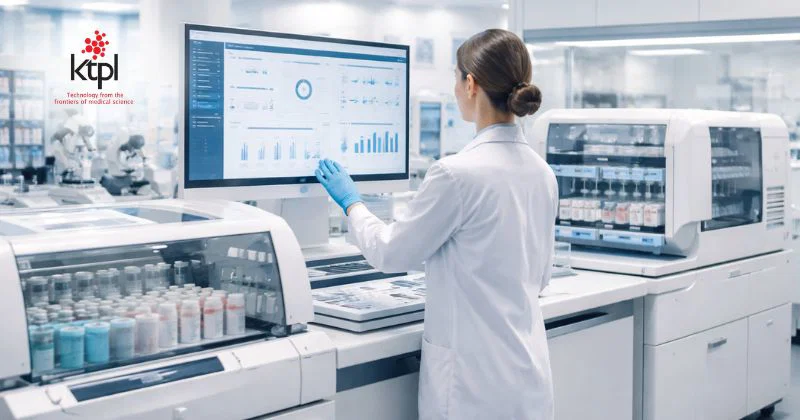
The pressure on pathology labs is escalating to deliver accurate diagnostic outcomes as the number of samples increases. Laboratories are increasingly implementing state-of-the-art technology to increase speed and consistency in the healthcare industry, where institutions are looking to decrease manual processes and increase efficiency.
Smart Automation is the redesign of the laboratory environment through the use of intelligent devices, digital controls, and automated processing to improve daily activities. State-of-the-art technologies in tissue processing systems are designed to assist the histopathology laboratory professionals in achieving the best quality, accuracy, efficiency, and repeatability.
This paper discusses how the use of automated tissue processing solutions is affecting lab performance and patient care outcomes.
Why Histopathology Laboratories Need Advanced Automation
Histopathology is a crucial step in the diagnosis of disease, planning of treatment, and medical research. Yet, conventional tissue preparation procedures have several manual steps that may lead to higher processing time and variability.
Some of the most common issues that may be found in laboratories are:
- High sample volumes
- Manual handling errors
- Inconsistent processing quality
- Extended turnaround times
- Limited staff availability
- Increasing regulatory compliance needs.
To address these problems, laboratories are moving towards Laboratory Automation Systems, which allow them to have standardized and reliable workflows.
Understanding Modern Tissue Processing Technology
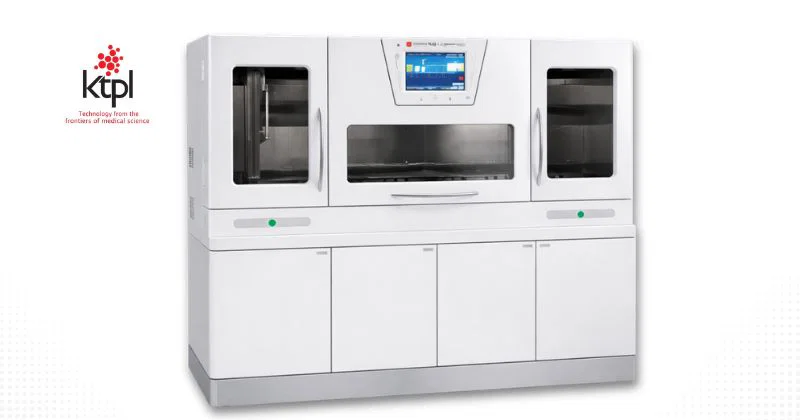
A tissue processing system is constructed to extract water and substitute it with appropriate processing reagents before embedding. This is a very important step that influences the quality of the sections, staining, and diagnostic accuracy.
Modern systems offer:
- Automated reagent management
- Programmable processing cycles
- Real-time monitoring
- Tracking and reporting of data.
- Enhanced specimen protection
- Improved workflow standardization
These enable much automation and standardisation of processing results.
How Automation Enhances Histopathology Workflow
1. Improved Laboratory Efficiency
Automation enables laboratories to handle more specimens but with reduced amount of supervision. Continuous and overnight operation with advanced scheduling and programmable protocols.
Benefits include:
- Reduced manual workload
- Faster specimen throughput
- Better resource utilization
- Reduced operational bottlenecks
A streamlined Histopathology workflow enables the laboratories to be productive and retain quality.
2. Greater Accuracy and Consistency
It is important to have uniformity when preparing tissues. Changes in processing may influence microscopic interpretation, and staining may not be as satisfactory.
Automated systems maintain:
- Precise temperature control
- Proper exposure time of the reagent
- Standardized processing protocols
- Repeatable specimen treatment
This level of control has very minimal variation, and it aids to achieve the same diagnostic results.
3. Enhanced Sample Protection
One of the greatest issues in a pathology laboratory is likely to be the integrity of the specimen. The current-day processors possess an integrated intelligence to identify and prevent abnormalities so that the valuable samples are safeguarded.
Key safeguards include:
- Process validation checks
- Automated alerts
- Backup processing programs
- Install specimen handling equipment. Supply sample processing equipment.
Install specimen handling equipment. Supply sample processing equipment.
The Role of Rapid Tissue Processor Technology
A Rapid Tissue Processor is made to speed up the process of specimen preparation with preserving an excellent morphology of the tissues.
Rapid processing technologies are superior to conventional technologies because they provide:
- Shorter processing cycles
- Improved laboratory turnaround times.
- It has increased the number of specimens to 1000 specimens per day.
- Less time taken to diagnose.
It is particularly helpful in busy hospitals, diagnostic centers, and research institutes where efficiency and accuracy are of the essence.
Reduced processing times imply better functioning of the laboratory and make clinical decision-making faster.
Benefits of Vacuum Infiltration Processing
The use of vacuum based processing techniques has gained uproar in the contemporary laboratories with the focus of improving tissue retention and reagent infiltration.
A vacuum infiltration processor is a processor that enhances the exchange of fluid in tissue samples through controlled pressure.
Advantages include:
- Improved reagent diffusion
- Better tissue morphology
- Reduced processing artifacts
- Better consistency among the various kinds of specimens.
These systems are effective in handling sensitive tissues, with caution required when handling and preserving.
Digital Integration and Data Management
The sophisticated Tissue Processing System solutions today are more than just automation; they're digitally connected and have workflow management features.
Integrated technologies enable:
- Process tracking
- Audit trail generation
- Quality control documentation
- The ability for LSI systems to interact with each other.
- Remote monitoring capabilities
This digital transformation not only adds value to the overall Histopathology Workflow, but it also introduces the added advantage of enhanced compliance, traceability, and operational transparency.
Future Trends in Histopathology Automation
It is likely that the future direction of laboratories will be driven by:
- Workflow management with AI capabilities.AI-powered workflow management.
- Predictive maintenance technologies
- Cloud-based laboratory monitoring
- Digital pathology integration
- Smart reagent optimization
- State-of-the-art analytics and reporting.
Smart Automation and Laboratory Automation Systems will enable future labs to be even more efficient, accurate, and scalable, as the innovations evolve.
Frequently asked questions (FAQs)
Q1. What is Smart Automation in histopathology?
Ans: Smart Automation refers to the use of intelligent laboratory technology to automate the work of processing the specimen, monitoring, data management, and quality control to increase efficiency and consistency.
Q2. What is the effect of a tissue processing system on a lab?
Ans: A tissue processing system guarantees standardization of tissue preparation, removes human error, enhances throughput, and provides consistent processing qualities of all tissues.
Q3. What are the benefits of using a Rapid Tissue Processor?
Ans: A Rapid Tissue Processor saves on the processing time, improves the productivity of labs, contributes to faster turnaround of diagnostic reporting and faster diagnostic reporting.
Q4. Why is it important to use a Vacuum Infiltration Processor?
Ans: A Vacuum Infiltration Processor enhances reagent penetration into tissues, improves preservation of the specimen, and yields more reproducible processing results.
Q5. Why are Laboratory Automation Systems advantageous to Pathology Labs?
Ans: Laboratory Automation Systems streamline the process, maximize traceability, and also ensure operational accuracy, besides helping laboratories to comply with quality standards.
Conclusion
Laboratories in the field of histopathology are continuously trying to achieve efficiency, accuracy, productivity, and the best standards of diagnosis. Labs are pursuing these objectives by using advanced automation technologies and standardizing and uniting workflows digitally, using intelligent processing.
Labs are being confident in handling increased workloads, with the assistance of automated solutions like modern tissue processing system solutions, Rapid Tissue Processor, and vacuum infiltration processor technologies. As the sphere of pathology is constantly changing, the ability to apply Smart Automation, modern Tissue Processing System technologies, and new Laboratory Automation Systems will become essential to offer faster diagnosis, improve the workflow of the Histopathology field, and help to achieve better patient results.
 +91-11-43523125
  mktg@ktplmedical.com